The Art of Metal Spinning Transforming Aluminum into Custom Hemispheres
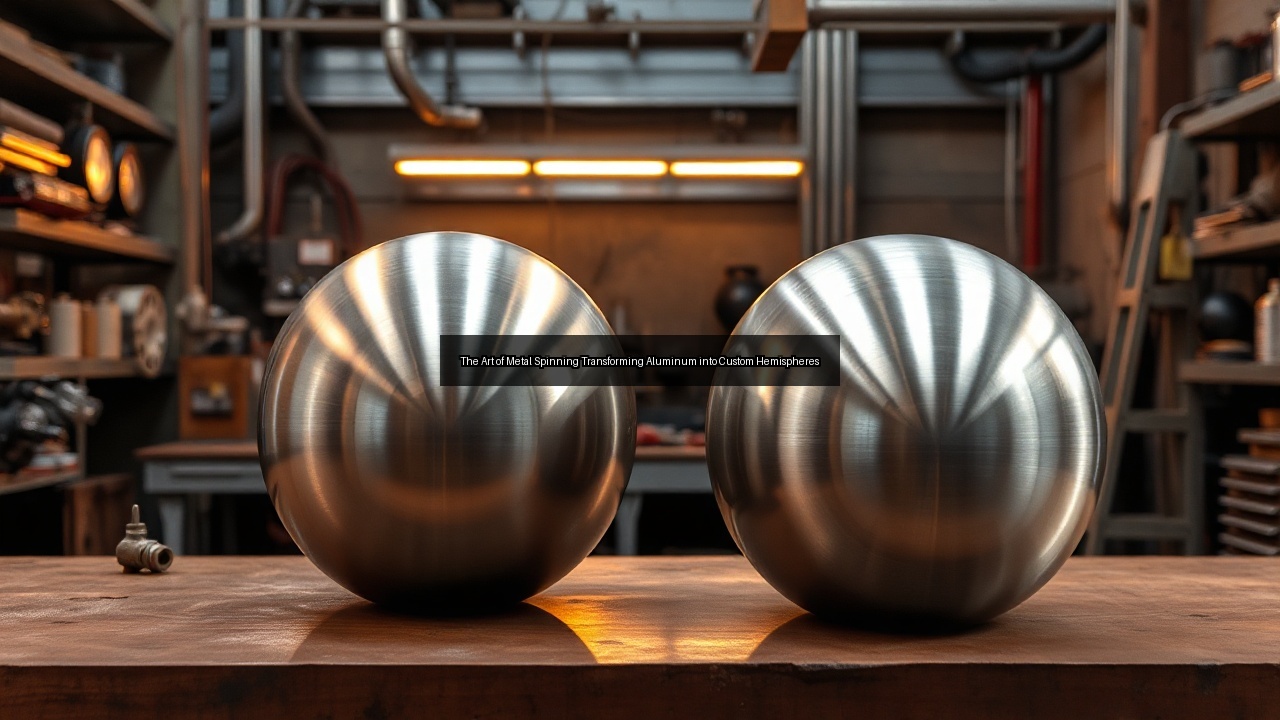
Understanding the Metal Spinning Process
Introduction to Metal Spinning
Metal spinning, a fascinating technique in the realm of metalworking, transforms flat metal sheets into complex shapes through a process of spinning. This method stands out in the manufacturing world due to its efficiency and versatility, enabling the creation of custom spun hemispheres and other intricate designs with precision. The process involves securing a metal disc onto a spinning lathe, where it is gradually shaped by tools that apply pressure, forming the desired geometry. This process allows for the production of symmetrical and uniform components, which is particularly essential when crafting items like custom hemispheres that require high levels of accuracy.
The Role of the Machinist in Metal Spinning
The machinist plays a pivotal role in metal spinning, acting as the bridge between raw materials and finished products. Expertise in manipulating the lathe and understanding the dynamics of metal is crucial. Machinists must possess a deep knowledge of various metals, including aluminum, iron, and other alloys, which influences their approach to spinning. They must also be adept at interpreting design specifications and adjusting parameters to achieve the desired thickness and finish. Precision is key; even the slightest miscalculation can lead to defects in the final product. Thus, the machinist’s skillset not only impacts the integrity of spun aluminum products but also ensures that custom spun hemispheres meet stringent quality standards.
Materials Used in Metal Spinning: Focus on Aluminum
Aluminum emerges as a preferred choice in the metal spinning industry due to its lightweight nature and excellent malleability. This metal allows for easy manipulation during the spinning process, making it ideal for creating custom spun hemispheres. Additionally, aluminum offers corrosion resistance and a high strength-to-weight ratio, making it suitable for a variety of applications. Other metals like iron and steel can also undergo spinning, but they may require different techniques due to their properties. When choosing materials for metal spinning, factors such as thickness, alloy composition, and intended use must be considered. Aluminum’s favorable characteristics make it the go-to material for many machinists looking to produce high-quality spun hemispheres.
Custom Spun Hemispheres: Design and Production
Design Considerations for Custom Hemispheres
Designing custom spun hemispheres involves careful planning and consideration of multiple factors. The intended application significantly influences the design, as different uses will demand varying dimensions, thicknesses, and finishes. For instance, hemispheres intended for industrial applications may require thicker walls to withstand pressure, while those for artistic purposes might prioritize aesthetics over strength. Moreover, the dimensions must align with specific tolerances to ensure proper functionality, especially if the hemispheres will fit into existing systems. Collaboration between designers and machinists is essential during this phase to address potential challenges and to refine prototypes. This partnership often leads to innovative designs that push the boundaries of traditional metal spinning.
Techniques for Creating Accurate Spun Hemispheres
Creating accurate spun hemispheres demands a combination of skill and technique. The initial step involves selecting the right aluminum sheet, followed by precise cutting to the desired diameter. The spinning process itself requires the machinist to control both speed and pressure carefully. Increasing the lathe's speed while gradually applying pressure helps to shape the aluminum into a hemisphere without causing deformation. Tools like spinning paddles and rollers are instrumental in this phase, allowing for intricate details to be incorporated into the design. Advanced technologies, such as computer numerical control (CNC) systems, have further enhanced the capabilities of metal spinning, allowing for even greater precision and repeatability in producing custom spun hemispheres.
Quality Control in Custom Metalwork
Quality control remains an integral part of the production process for custom spun hemispheres. Ensuring that each product meets the required specifications involves a series of checks throughout the manufacturing process. Machinists typically conduct visual inspections during spinning to catch any signs of defects early, such as warping or uneven surfaces. After completion, more rigorous testing may include dimensional checks using calipers and gauges to confirm accuracy. For applications requiring higher standards, non-destructive testing methods may be employed to assess the integrity of the spun aluminum. This comprehensive quality control approach ensures that finished products not only meet design expectations but also perform effectively in their intended applications.
Applications of Custom Spun Hemispheres
Industrial Uses of Spun Aluminum Hemispheres
Custom spun hemispheres find extensive use in various industrial applications. Their lightweight yet durable nature makes them ideal for components in machinery, automotive parts, and aerospace elements. In the automotive industry, for example, spun aluminum hemispheres can serve as housings for sensors or as components in exhaust systems. Additionally, they play a crucial role in the aerospace sector, where weight reduction is essential for fuel efficiency. Beyond machinery, these hemispheres often serve as pressure vessels in chemical processing, where their ability to withstand internal pressures is paramount. The versatility of spun aluminum allows it to adapt to numerous industrial demands, showcasing the significance of this manufacturing technique.
Artistic and Decorative Applications
Custom spun hemispheres also lend themselves beautifully to artistic and decorative applications. Artists and designers leverage their unique shapes and finishes to create stunning visual pieces, ranging from sculptures to functional art like light fixtures and home decor. The smooth, reflective surface of spun aluminum enhances the aesthetic appeal, providing a modern touch to various projects. Customization options allow artists to incorporate patterns, textures, and colors, transforming a simple hemisphere into a captivating centerpiece. Moreover, the adaptability of aluminum makes it a favorite among designers looking to push creative boundaries while ensuring the durability of their works. This fusion of artistry and engineering demonstrates the potential of custom spun hemispheres in the creative sector.
Comparing Spun Aluminum to Other Metals
When comparing spun aluminum to other metals like iron or steel, several key differences arise that influence material choice. Aluminum’s lightweight properties and resistance to corrosion make it superior for applications where weight is a concern. While iron provides strength and durability, it often lacks the versatility of aluminum in terms of shaping and finishing. Steel, on the other hand, offers an excellent strength-to-weight ratio but may require more energy-intensive processes during spinning. Each metal has its advantages and disadvantages, and the choice often depends on the specific requirements of the project. However, for custom spun hemispheres, aluminum consistently stands out as the preferred material, balancing performance with aesthetic potential.
See Also
- The Science Behind Metal Spinning and Custom Hemispheres
- Crafting Perfection with Custom Spun Hemispheres for Every Project
- Elevate Your Metalworking Skills with Custom Spun Hemispheres
- From Concept to Creation How Custom Spun Hemispheres Are Made
- The Benefits of Using Custom Spun Hemispheres for Your Next Project